
QUICK LINKS:
When in 1991 the internet became available for public, we didn’t know that it will become the holy grail of our lives. It has and will continue to have a huge impact on our day-to-day activities.
As the internet became popular and a household name so did its commercialization. Today everything is available on the internet : from music to food, to even your life partner – you will find it all.
So what happens when you open such a mammoth network for the public, give control to them and let them use it however they seem fit. The answer to this is a huge list but below are few important points to note:
These are the two main points that gave rise to internet censorship. So what does government do. A simple answer would be that they can temporarily block all social media or websites as we saw this happen in few countries recently.
Giants like Netflix or Hulu, also geo-restrict their contents.
Apart from this, your ISP also controls your internet experience. They throttle your internet speed depending on the amount you are paying them and collect your online footprint.
The rise of proxies:
When there are restrictions, smart people will always find a way to bypass them. This lead to the development and rise of VPN and proxies.
Here’s how to understand what a Proxy or VPN does. Suppose your ISP has blocked a website, now to access this blocked website you will first send a request to a server outside your country and that server will fetch the website on your behalf. As the server belongs to a country where the website is not blocked, you will be able to view the website
Check also this : Web scraping for business.
This server acts as a middleman and you do not have to directly request access for the website, hence it is called a proxy server.
Using Google as a proxy server:
As I mentioned earlier, smart people will always find a way to bypass restrictions and the best way I recently stumbled upon was using Google as a proxy server.
Don’t rub your eyes, you read it right, “Googleâ€. Actually, there are two simple ways which I will explain in detail.
Method 1: Using GoogleWeblight
GoogleWeblight is a wonderful initiative by Google to speed up website loading time when using Google Chrome. It removes ads and other unnecessary components and thus speeds up the browsing and saves data as well. To achieve this, Google routes the traffic through their servers.
When using Google as a proxy, as few website components are not loaded, the website may appear a bit different but it’s better than no website at all.
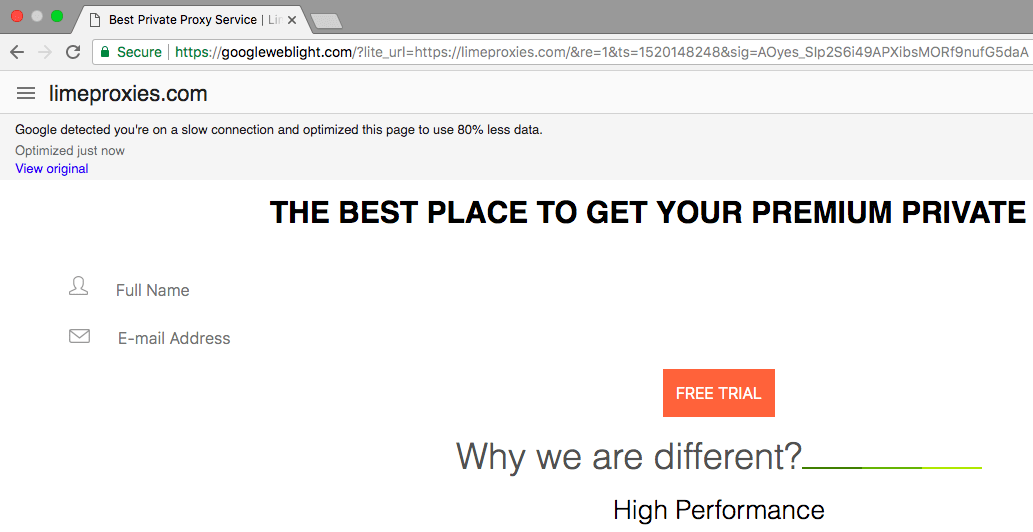
So Google acts as a middleman or proxy server. To load a website using Weblight, use the below URL
http://googleweblight.com/?liteurl=http://WEBSITEURL (Change the WEBSITE URL to your own URL)â€
A point worth noting is that Google won’t be able to show all the websites that you access through Weblight as not all pages can be transcoded
Method 2: Using Google Translator
Google can translate web pages from one language to another. When you use Google translator, using its servers it will convert the contents of the page to your requested language, this enables us to use it as a proxy server. Follow below mentioned simple steps to achieve this.
Step 1: Open https://translate.google.com/
Step 2: Enter the website address that you wish to access in the first box, example https://limeproxies.com/
Step 3: Now in the second box choose any language other than the one the web page originally is in and click on the link
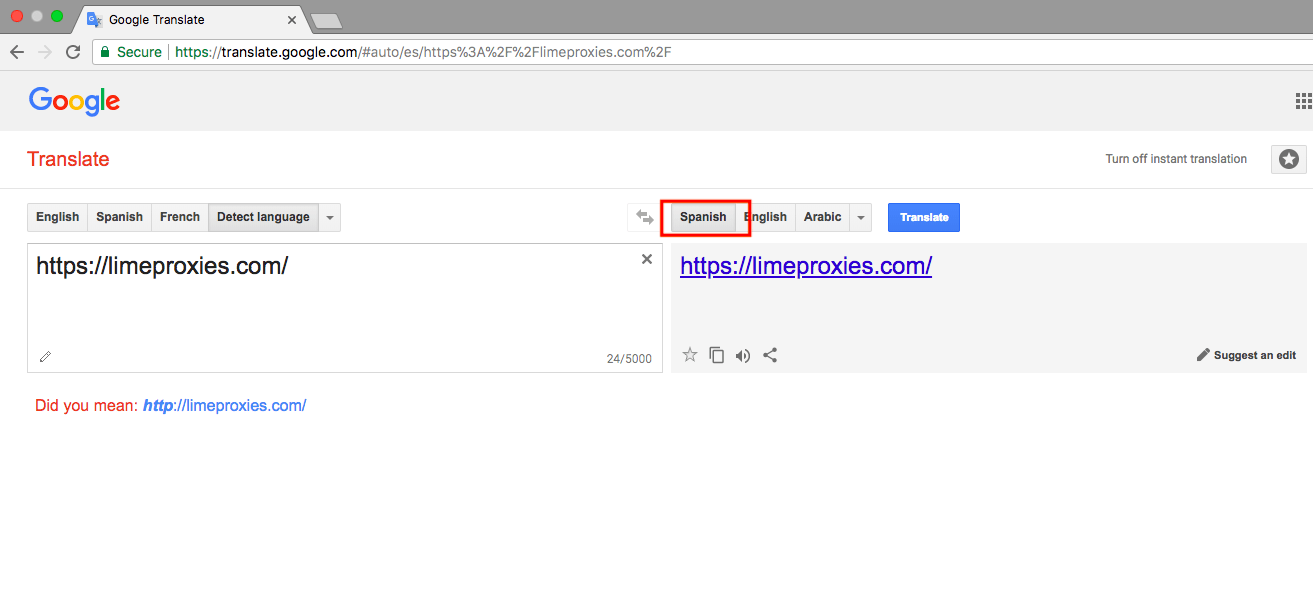
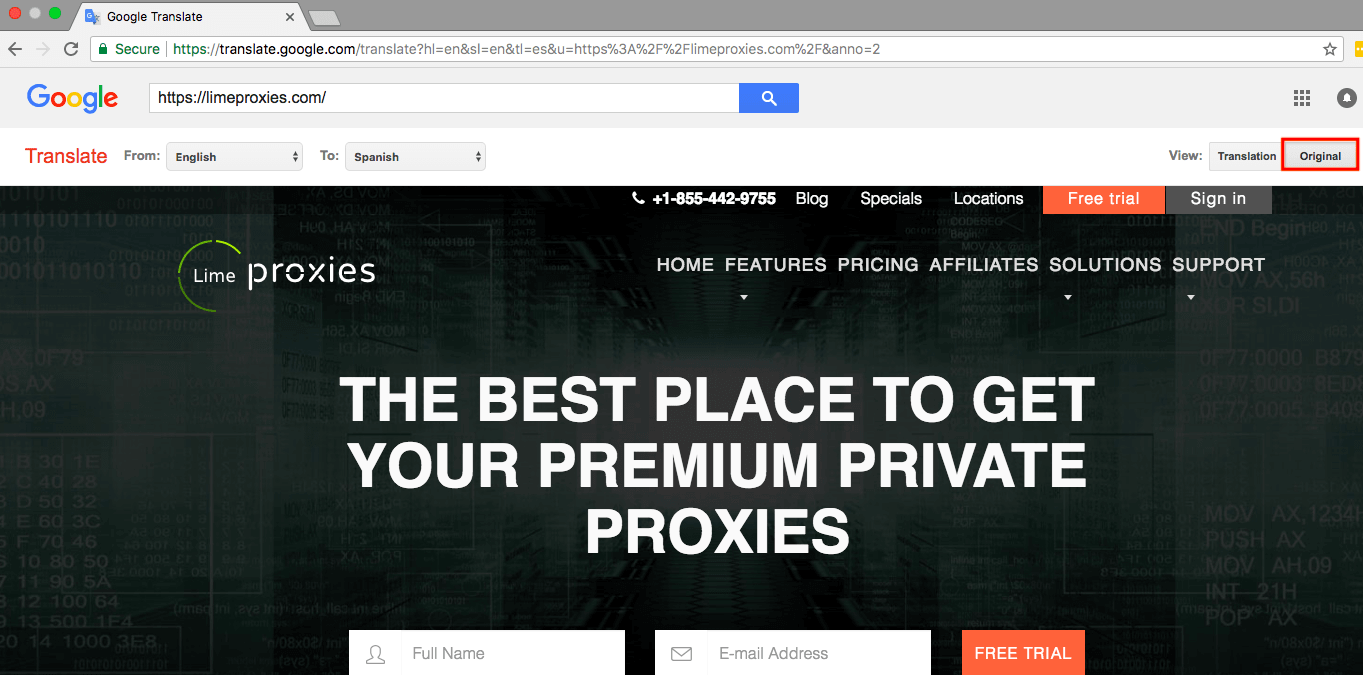
Step 4: Once the web page loads, click on “Original†to view the original web page
These were the simple tricks that can make Google works as a proxy server for you. Although it may not be as powerful as using a paid proxy server it’s worth a try and can be useful in case you need to check a website when you do not have a proxy handy.
Post Quick Links
Jump straight to the section of the post you want to read:



About the author
LimeProxies Editorial Team
We are the engineers and support staff who run the LimeProxies network — the people who provision residential, datacenter, ISP and mobile capacity across 100+ countries and answer the tickets when something breaks. We write about what we see from that seat: why requests get blocked, how detection actually works, and what the numbers say rather than what marketing would prefer. Every claim that comes from research is linked to its primary source so you can check it yourself, and we will tell you when the honest answer is that you do not need what we sell.
View all postsRelated Articles
Are Free Proxies Safe? What 53 Million Exit Nodes Reveal
Free proxies are not free — they are paid for with someone's compromised device, and often with your data. Independent 2026 research measured how much of the free proxy supply runs on malware-infected hardware, and the number is worse than most teams assume.
Web Data Collection for AI in 2026: The Closing Web
The open web stopped being open by default. Blanket AI-crawler blocking, per-crawl paywalls and a widening crawl-to-referral gap have changed the economics of collecting training and retrieval data. This is what actually changed, and what a defensible pipeline looks like now.
Why Your Scraper Gets Blocked: The 2026 Anti-Bot Stack
If you are still getting 403s on clean residential IPs, the IP is not the problem. Modern bot detection scores five independent layers, and four of them live in your HTTP client — not your proxy. This is what each layer measures and what you can actually do about it.